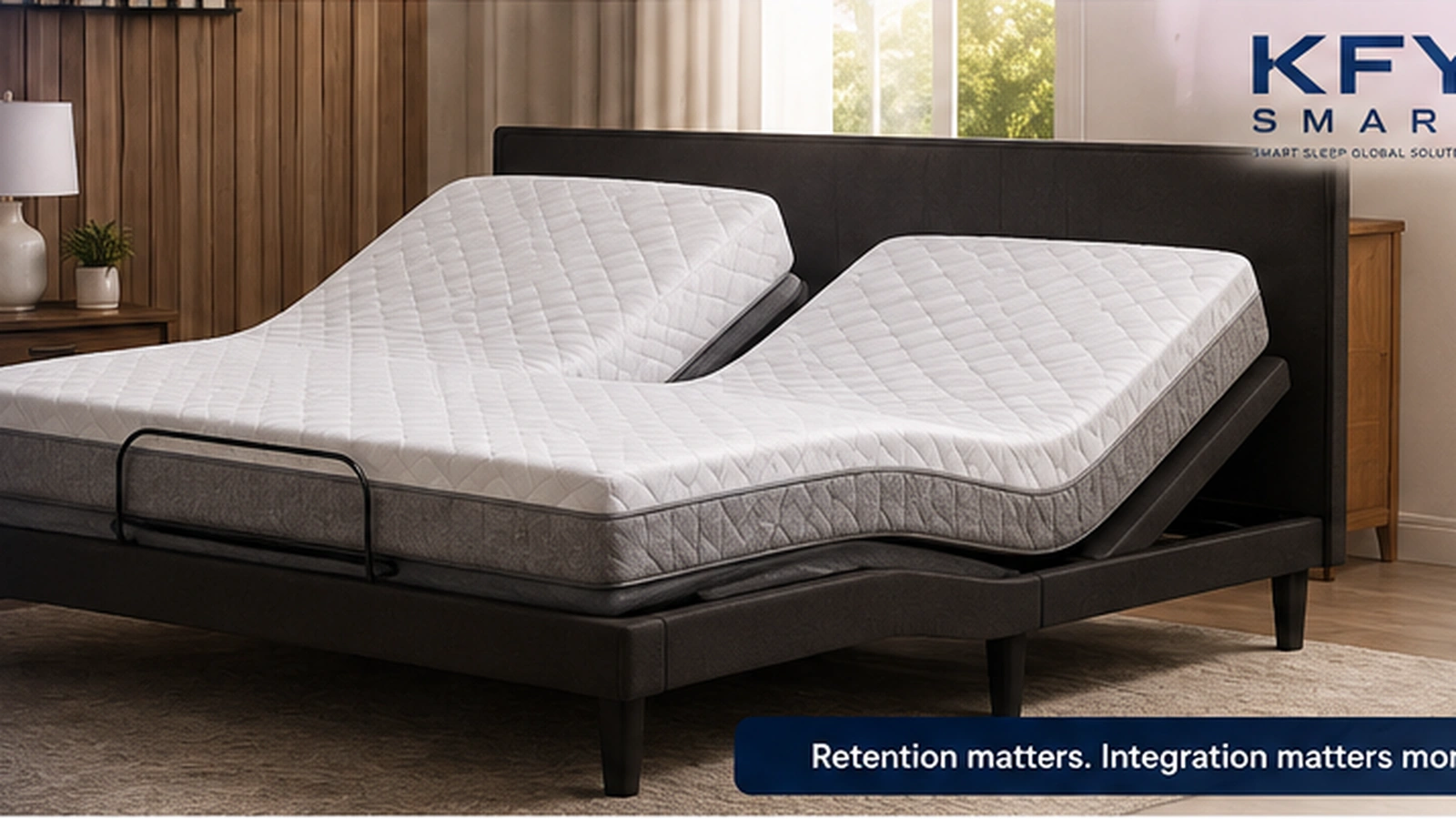
Mattress movement on an adjustable base is a system question, not simply a mattress or hardware problem. Repeated articulation changes the relationship between the mattress, moving platform, surface materials and surrounding furniture.
Mattress compatibility asks whether the mattress can properly articulate with the base. Mattress retention asks whether the mattress remains correctly positioned during repeated articulation and normal use. Both must be validated separately.
Why Can a Mattress Move on an Adjustable Bed Base?
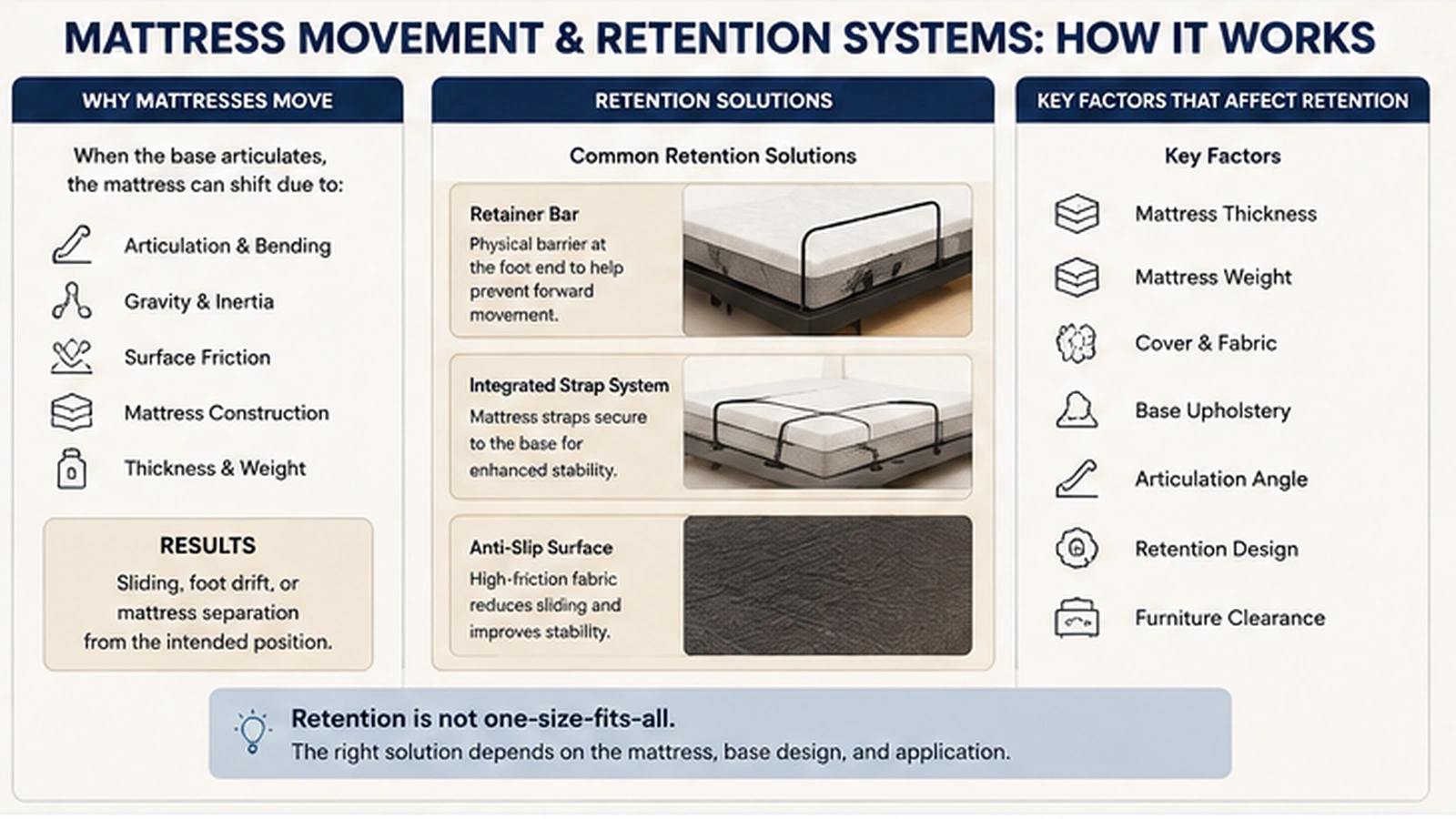
When the head or foot section rises, the mattress flexes and its contact pressure changes across the platform. Repeated motion can expose small mismatches in dimensions, flexibility, cover material, edge construction, bedding and surface friction. A base that appears stable while flat can therefore show migration after normal articulation.
Mattress Compatibility and Mattress Retention Are Not the Same Thing
A mattress may be flexible enough to articulate yet still move out of position. Conversely, a retention component cannot make an unsuitable mattress compatible. Buyers should validate articulation behavior and positional stability as separate approval gates. See our detailed guide to adjustable bed mattress compatibility.
What Is an Adjustable Bed Mattress Retainer?
A mattress retainer is a component or integrated system intended to help keep the mattress correctly located as the platform moves. A foot-end retainer bar is a common approach in official adjustable-base manuals, but it is not the only valid solution. Retention method depends on the adjustable-base platform, mattress specification and intended product configuration.
Why the Foot End Is Important
As the base articulates, the foot end can provide a practical reference point for mattress position. Several manufacturer manuals instruct installers to fit a retainer bar into mounting points at the foot of the platform. The specific location and installation method must still follow the selected product documentation.
Why Mattress Thickness Matters
Thickness affects how the mattress bends, where it contacts a retainer and the finished system geometry. There is no universal approved thickness: buyers should test the intended range with the selected base, bedding and furniture.
Why Mattress Weight Matters
Weight changes the forces acting on the mattress, but a heavier mattress does not automatically stay in place. Construction, flexibility, cover material, platform upholstery and repeated motion remain relevant.
Surface Friction Helps — But It Should Not Be the Only Strategy
Platform upholstery and mattress cover materials can contribute friction, but friction varies with materials, wear, protectors and bedding. It should support—not replace—an approved retention and validation strategy.
What About Integrated Straps or Other Retention Systems?
Some platforms may use integrated straps or another designed-in method. Buyers should review how the system installs, interacts with the mattress, accommodates covers and protectors, and can be serviced or replaced.
Mattress Retainer Bar vs. Integrated Retention
A bar can provide visible foot-end restraint and may be replaceable. Integrated retention may reduce visible hardware or suit a particular platform architecture. Neither is universally superior; the correct choice depends on mattress specifications, customer experience, assembly and service planning.
The Mattress Retainer Should Not Be Evaluated Alone
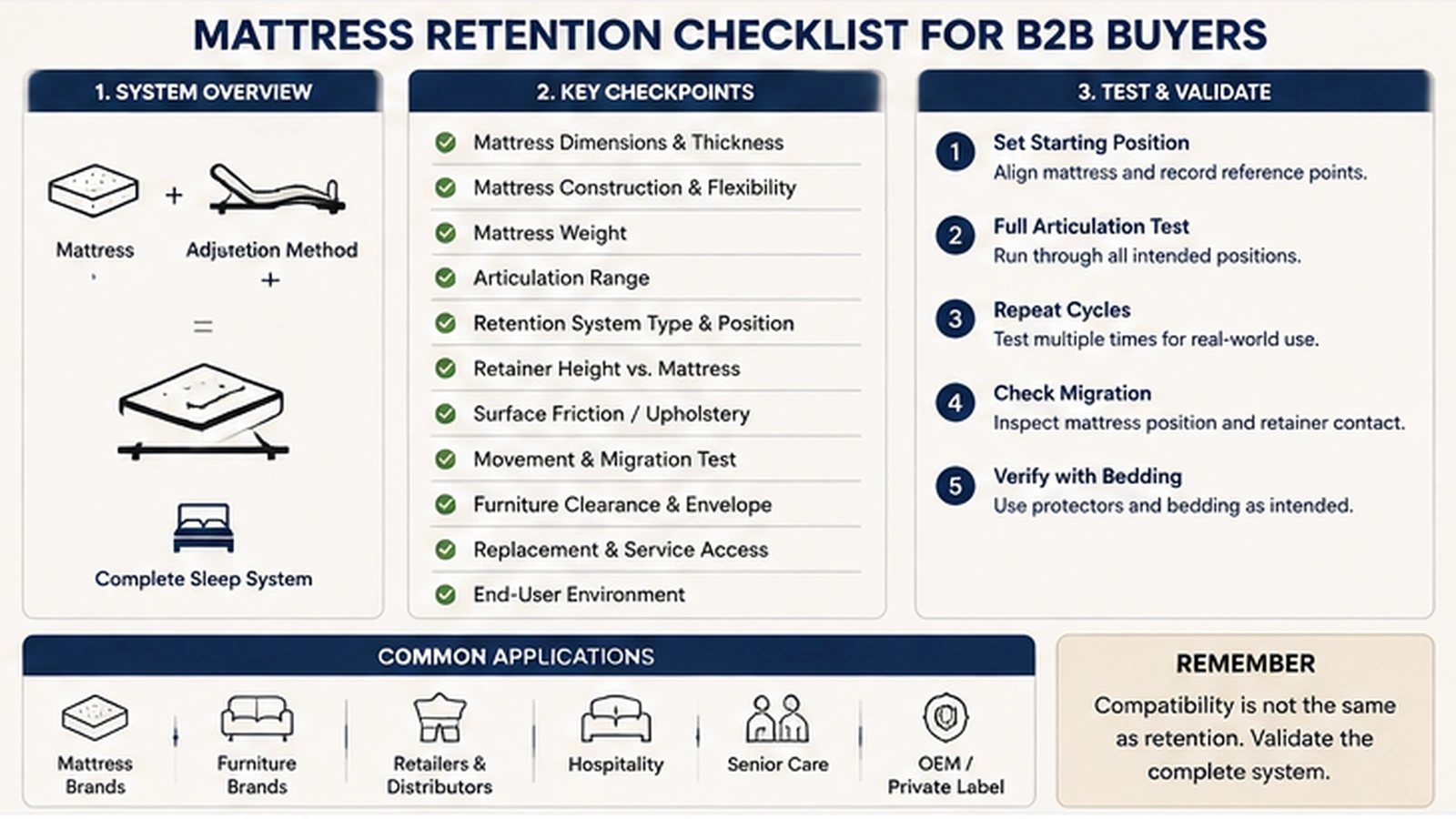
Review mattress dimensions, thickness, construction, weight, cover material, edge support and flexibility together with platform dimensions, articulation range, profile, upholstery and motor/control configuration. Furniture dimensions, footboard, rails, headboard, drawers and the full movement envelope also matter. Broader adjustable bed features that matter for B2B programs should be considered alongside the retention system.
A Practical B2B Mattress-Retention Test
- Record the starting mattress position.
- Run the intended articulation positions.
- Repeat multiple articulation cycles.
- Inspect mattress migration.
- Inspect retainer interaction.
- Test with the intended bedding and mattress protector configuration.
- Recheck furniture clearance.
A single articulation cycle is not enough to evaluate mattress migration. Use repeated-articulation validation and document each mattress-migration check without assuming one universal cycle count.
What Mattress Brands Should Specify
Provide dimensions, thickness range, construction, weight, cover material, edge support and flexibility. Include the planned protector and bedding, plus criteria for second-life mattress compatibility when customers replace the mattress later.
What Furniture Brands Should Check
Confirm internal dimensions, platform support, footboard relationship, side rails, headboard clearance, drawer mechanisms and movement envelope. See the bed-frame compatibility guide for the wider furniture review.
What Retailers and Distributors Should Consider
Sales and service documentation should distinguish flexibility from retention and explain replacement mattress compatibility. A system designed around one mattress architecture may create future cross-brand mattress compatibility questions.
What Hotels Should Consider
Hospitality programs should include bedding changes, housekeeping procedures, repeated use and replacement-mattress sourcing in their validation and after-sales planning.
What Senior-Care Projects Should Consider
Project teams should assess intended users, maintenance access and local safety requirements without presenting mattress retention as a medical treatment or outcome.
What Should Be Included in an OEM/ODM RFQ?
Include mattress and base dimensions, mattress construction, weight and cover; platform profile and articulation; retention type, location, installation and spare parts; furniture drawings and movement envelope; packaging, target market, expected quantity and after-sales documentation.
KFY SMART's B2B Approach to Mattress and Base Integration
KFY SMART works with mattress, furniture and retail partners developing adjustable bed bases. Retention method depends on the adjustable-base platform, mattress specification and intended product configuration. Buyers should confirm final functionality and service requirements before sampling.
Related sourcing topics include wall-hugger movement geometry and adjustable-base weight and foldable design.
FAQ
Why does my mattress slide on an adjustable bed base?
A mattress may move because articulation repeatedly changes its angle and contact with the platform. Mattress flexibility, weight, cover material, surface friction, bedding and the selected retention system can all affect migration.
What is a mattress retainer bar for an adjustable bed?
A mattress retainer bar is one type of retention component, commonly installed at the foot end of an approved platform, that helps the mattress remain positioned while the base articulates.
Does every adjustable bed need a mattress retainer bar?
No. Retention methods vary by adjustable-base platform and product configuration. Some systems use bars, while others may use integrated straps, surface materials or another approved design.
Can I use another brand of mattress on an adjustable base?
Potentially, but cross-brand mattress compatibility and retention should be confirmed for the mattress dimensions, construction, flexibility, weight and the base manufacturer’s requirements.
Does a heavier mattress slide less?
Not necessarily. Weight is only one factor; flexibility, cover material, friction, articulation behavior and the retention system also influence mattress migration.
Does mattress thickness affect the retainer?
It can affect how the mattress interacts with the retainer and how the complete system articulates. Buyers should validate the intended thickness range rather than assume a universal value.
Is mattress retention the same as mattress compatibility?
No. Compatibility asks whether the mattress can articulate properly with the base. Retention asks whether it remains correctly positioned during repeated articulation and normal use.
What should B2B buyers test before approving a mattress and adjustable base?
Test the intended mattress, base, retention system, bedding and furniture together through repeated articulation, then inspect migration, retainer interaction, clearance and service requirements.
Sources
Plan Your Mattress-and-Base Program
Developing an adjustable base for your mattress or furniture program? Send KFY SMART your mattress dimensions, thickness, construction, furniture configuration and target market so the complete retention and compatibility system can be reviewed before sampling.