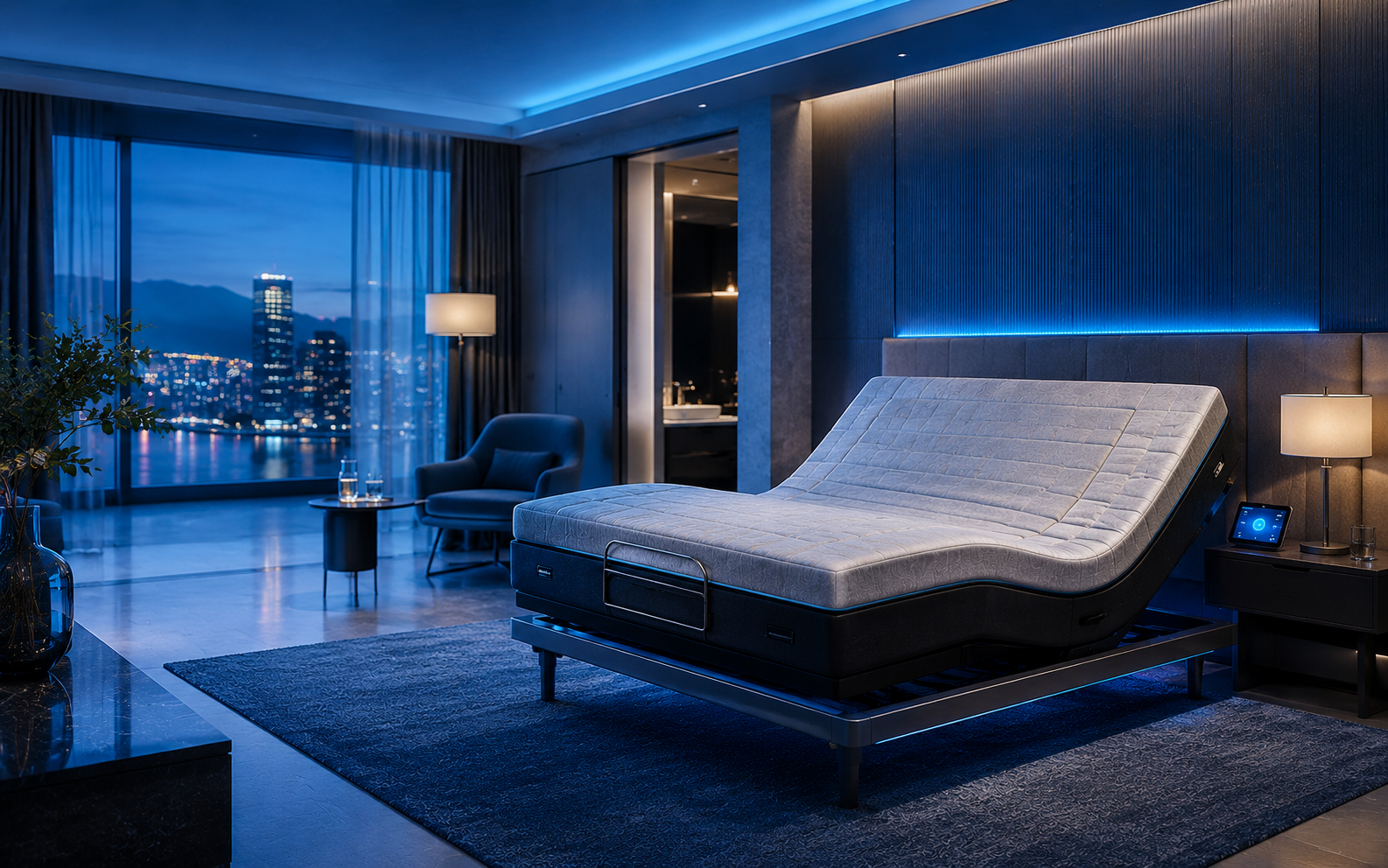
Hotels have traditionally competed through location, service, design and amenities. In 2026, the quality of rest is becoming an increasingly visible part of the guest experience.
Hilton’s 2026 Trends Report found that 56% of global respondents identified “rest and recharge” as their leading motivation for leisure travel. The report also highlighted demand for silence, serenity and familiar home comforts.
For hospitality operators, this creates an opportunity to treat the bed and bedroom as more than standard room equipment.
The goal is not to turn every guest room into a technology showroom. The goal is to remove friction, improve comfort and give guests simple choices that support different ways of resting.
Quiet is becoming a premium feature
Hotel guests are increasingly aware of noise from corridors, elevators, HVAC systems, adjoining rooms and outside traffic. A visually impressive room can still receive poor reviews if the sleep environment feels noisy or difficult to control.
A quiet-room strategy may involve architectural improvements, but product selection also matters.
Adjustable beds used in hotels should be evaluated for:
- Motor noise during movement
- Frame stability
- Contact noise between moving parts
- Mattress movement and anti-slip performance
- Control sounds and button feedback
- Installation quality
- Long-term serviceability
A guest should be able to adjust the bed without disturbing another occupant or feeling that the product is complicated.
Better rest does not require excessive technology
Smart hotel rooms often include lighting, curtains, temperature, entertainment and mobile controls. However, adding more interfaces can make the room harder to use.
For sleep products, the most valuable functions are often the easiest to understand:
- Head lift for reading or watching television
- Foot lift for a relaxed resting position
- One-touch return to flat
- Clearly marked controls
- Memory positions where appropriate
- Simple instructions near the bed
Some projects may consider massage, lighting or connected controls. These should be evaluated according to room type, maintenance capability, target guest and operating budget. For the wider product context, see smart sleep technology trends.
Optional features should never be presented as standard unless they are included in the confirmed product configuration.
Adjustable sleep can support room differentiation
Hotels do not need to install the same bed in every room.
A practical hospitality program can use adjustable products in selected room categories:
Premium rooms and suites
An integrated smart bed or upholstered adjustable solution can become part of the room design. The product can support a more residential feel while offering reading and relaxation positions.
Extended-stay and serviced apartments
Guests staying for longer periods may value flexible positions for working, reading and relaxing. A complete smart bed can help the room function as both a sleeping and living space.
Wellness-focused rooms
Selected hotels may create sleep-oriented room packages with quieter locations, blackout solutions, pillow choices and adjustable comfort. The bed should support the overall experience rather than being promoted as a medical product.
Accessible and age-friendly rooms
Depending on local requirements and project scope, hotels may evaluate bed height, bedside clearance, control simplicity and optional support features. Accessibility planning should always follow applicable building, safety and hospitality standards.
What hotel buyers should evaluate before sourcing
1. Room dimensions and circulation
The full bed footprint matters, especially when the product includes an upholstered border, headboard or side structure. Buyers should confirm access space, furniture clearances and housekeeping routes.
2. Housekeeping requirements
The design should allow practical cleaning around and under the bed. Fabrics, seams, controls and exposed mechanisms should be considered from a maintenance perspective.
3. Durability and repeated use
Hotel furniture experiences frequent use by guests with different habits and body weights. Frame structure, moving joints, motors and controls should be evaluated for the intended operating environment.
4. Electrical standards
Plugs, voltage, cable routing and control systems must match the destination market and room design. Installation planning should prevent loose or exposed cables.
5. Replacement and service
Hotels need a realistic plan for replacing remotes, motors, control boxes or upholstery parts. A product that cannot be serviced efficiently may create room downtime.
6. Brand and design integration
Fabric color, headboard style, border thickness and visible hardware should align with the hotel interior. Private-label documentation and packaging may also be required for project delivery.
The B2B opportunity behind the sleep-travel trend
The growing focus on rest gives hotels a new way to communicate value.
A well-designed adjustable sleep product can support a premium room story, but the product must remain easy to use and easy to maintain. In hospitality, reliability and operational simplicity are often more important than the largest possible feature list.
For manufacturers, distributors and project contractors, this means hospitality products should be selected as complete programs rather than isolated beds.
The product, room layout, mattress, controls, installation, spare parts and guest instructions all need to work together.
Smart sleep solutions for hospitality projects
KFY SMART provides Smart Beds, Adjustable Bed Bases and Smart Mattresses for global B2B and project discussions.
Available structures and options vary by model. Hotels, serviced-apartment operators, distributors and project partners can contact KFY SMART through the Contact page to discuss room type, dimensions, positioning, fabrics, controls, packaging and delivery requirements.